
The Role of AI in Automotive Safety: How Intelligent Systems Are Transforming Road Protection

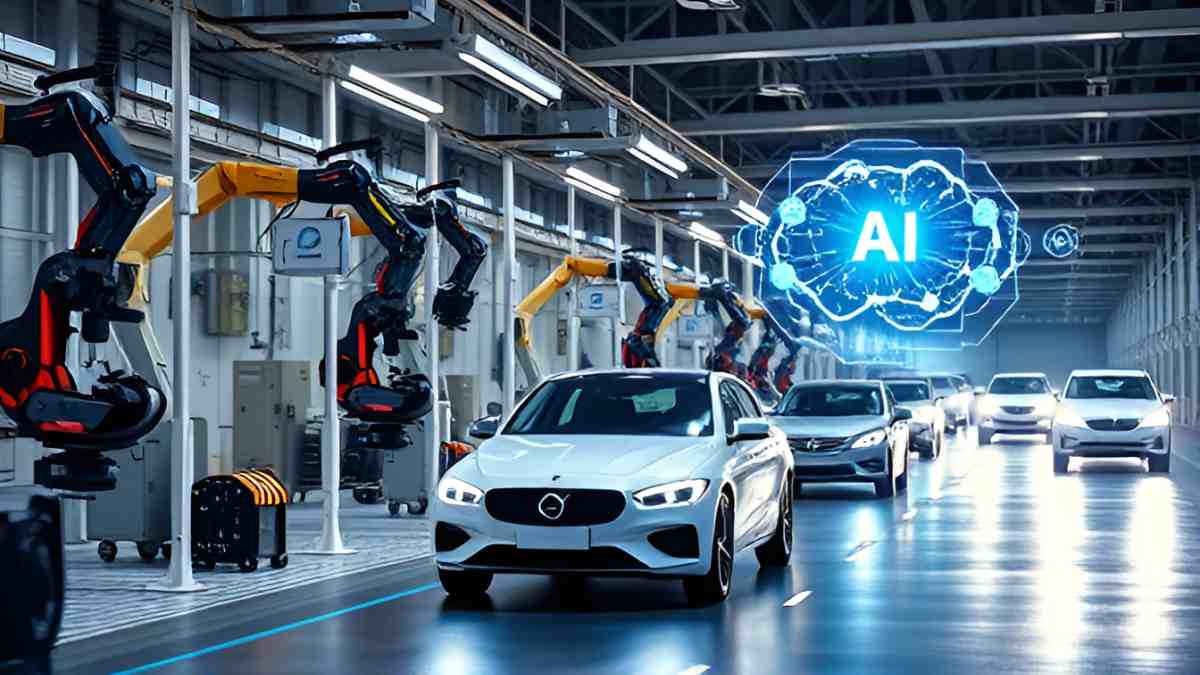
Artificial Intelligence (AI) is reshaping automotive safety by enabling vehicles to detect risks, assist drivers, and even prevent accidents before they happen. Modern safety systems no longer rely solely on mechanical engineering—they now combine machine learning, sensor fusion, predictive analytics, and real-time decision-making to improve road safety for drivers, passengers, and pedestrians.
As vehicles become increasingly connected and autonomous, AI is emerging as a central force behind next-generation transportation safety solutions.
What Is AI in Automotive Safety?
AI in automotive safety refers to the use of intelligent algorithms that process data from cameras, radar, lidar, and onboard sensors to identify hazards, interpret road conditions, and support driver decisions in real time.
Unlike traditional safety features that react after a collision begins, AI-enabled systems can:
- Predict dangerous situations
- Alert drivers earlier
- Assist steering and braking
- Prevent crashes entirely in some cases
This shift marks a major evolution from passive protection toward proactive accident prevention.
Why AI Matters for Road Safety Today
Human error contributes to a large percentage of road accidents worldwide. AI helps reduce this risk by supporting drivers with faster reaction times and improved situational awareness.
Key advantages include:
- Continuous environmental monitoring
- Faster-than-human hazard detection
- Reduced driver fatigue impact
- Improved response accuracy
- Enhanced pedestrian awareness
AI transforms vehicles from passive machines into active safety partners.
Core AI Technologies Used in Automotive Safety
Modern vehicles rely on multiple intelligent technologies working together to maintain safety.
1. Computer Vision Systems 👁️
Computer vision allows vehicles to interpret visual data captured by cameras.
These systems can detect:
- Lane markings
- Traffic signals
- Road signs
- Pedestrians
- Cyclists
- Other vehicles
By analyzing visual information instantly, vehicles can assist drivers in maintaining safe positioning and awareness.
2. Sensor Fusion Technology
Sensor fusion combines data from several inputs such as:
- Cameras
- Radar
- Lidar
- Ultrasonic sensors
- GPS modules
This integration improves accuracy and reliability, especially in difficult driving conditions like fog, darkness, or heavy traffic.
3. Machine Learning Algorithms
Machine learning enables vehicles to learn from driving patterns and environmental conditions over time.
Applications include:
- Predicting collision risks
- Identifying abnormal traffic behavior
- Recognizing driver fatigue signals
- Improving navigation decisions
These capabilities help vehicles adapt to changing road environments dynamically.
4. Edge Computing in Vehicles
Edge computing allows AI systems to process safety data directly inside the vehicle rather than relying only on cloud connectivity.
Benefits include:
- Faster response time
- Reduced latency
- Improved reliability during connectivity loss
- Enhanced data privacy protection
Real-time processing is essential for safety-critical decision-making.
AI-Powered Safety Features in Modern Vehicles
AI technologies support several advanced safety features already available in many vehicles today.
Advanced Driver Assistance Systems (ADAS)
ADAS technologies represent one of the most visible applications of AI in automotive safety.
Common ADAS features include:
- Automatic emergency braking
- Adaptive cruise control
- Lane-keeping assistance
- Blind-spot monitoring
- Traffic sign recognition
These systems help drivers maintain control and avoid potential collisions.
Driver Monitoring Systems 😴
Driver monitoring uses AI to evaluate attention levels and detect fatigue or distraction.
Typical monitoring indicators include:
- Eye movement patterns
- Head position
- Steering behavior
- Reaction timing
If unusual behavior is detected, alerts are triggered to prevent accidents.
Collision Avoidance Systems
AI-powered collision avoidance systems analyze surrounding traffic conditions continuously.
They can:
- Warn drivers of potential impact
- Apply brakes automatically
- Adjust steering trajectory
- Reduce collision severity
These systems significantly reduce accident risks in urban environments.
Intelligent Parking Assistance
Parking assistance uses AI and sensors to help drivers navigate tight spaces safely.
Capabilities include:
- Automated parking guidance
- Surround-view visualization
- Obstacle detection alerts
- Self-parking functionality
These features reduce low-speed collision incidents.
The Role of AI in Autonomous Driving Safety
Autonomous driving represents one of the most advanced uses of AI in automotive safety.
Self-driving systems rely on AI to:
- Understand road environments
- Predict movement of nearby vehicles
- Identify unexpected obstacles
- Maintain safe distances
- Adjust driving speed dynamically
Although full autonomy is still evolving, partial automation already improves safety outcomes in many driving scenarios.
Benefits of AI Integration in Automotive Safety Systems
AI contributes measurable improvements across several safety dimensions.
Major benefits include:
- Faster hazard recognition than human drivers
- Reduced accident frequency in supported vehicles
- Improved pedestrian protection
- Enhanced night-driving safety
- Better traffic flow coordination
- Reduced insurance risk exposure
These advantages demonstrate how intelligent systems support safer mobility ecosystems.
Challenges Facing AI-Based Automotive Safety
Despite major progress, some technical and regulatory challenges remain.
Common challenges include:
- Sensor limitations during extreme weather
- High implementation costs
- Cybersecurity concerns
- Data privacy considerations
- Regulatory approval complexity
- Infrastructure compatibility issues
Addressing these challenges is essential for widespread adoption.
The Future of AI in Automotive Safety 🚀
AI-driven automotive safety systems are expected to become increasingly advanced over the coming years.
Future developments may include:
- Vehicle-to-vehicle communication systems
- Predictive traffic coordination networks
- Fully autonomous emergency avoidance systems
- Real-time smart infrastructure integration
- AI-supported accident prevention ecosystems
These innovations will continue transforming transportation safety standards worldwide.
Conclusion
Artificial Intelligence is redefining automotive safety by enabling vehicles to interpret environments, anticipate hazards, and assist drivers with real-time decisions. From advanced driver assistance systems to autonomous navigation technologies, AI plays a central role in preventing accidents and improving road awareness. As intelligent mobility solutions evolve further, AI will remain a critical foundation for safer transportation systems across both urban and highway environments.
Frequently Asked Questions (FAQs)
1. How does AI detect pedestrians and cyclists on the road?
AI systems use computer vision models trained on large datasets to recognize movement patterns, shapes, and positions associated with pedestrians and cyclists.
2. Can AI safety systems work without internet connectivity?
Yes. Many safety features operate using onboard processing through edge computing, allowing them to function even when vehicles are offline.
3. Are AI-powered safety features available in budget vehicles?
Some entry-level vehicles now include simplified AI-assisted safety tools such as lane departure warnings and collision alerts, though advanced features remain more common in higher-end models.
4. How do AI systems handle unexpected road obstacles?
AI analyzes sensor input continuously and can trigger alerts, braking, or steering adjustments when unusual obstacles appear suddenly.
5. Is AI capable of replacing human drivers completely?
Fully autonomous driving is still under development. Current systems are designed primarily to assist drivers rather than replace them entirely.
6. Do AI automotive safety systems require regular software updates?
Yes. Updates improve detection accuracy, fix vulnerabilities, and enhance performance based on newly collected driving data.
7. How does AI contribute to safer night driving conditions?
AI enhances night driving by combining radar, infrared sensing, and camera-based object recognition to identify hazards that may be difficult for drivers to see clearly.
Comments are closed.